Leave Your Message

2026 Top RTV Molding Manufacturers for Global Buyers?

Choosing the right Rtv Molding manufacturer involves more than comparing quoted prices. Buyers need dependable parts, clear technical communication, and production capacity that matches their project. A supplier may look impressive online, yet provide little evidence of consistent quality. Ask how it controls material batches, mold design, curing conditions, and inspection records. These details matter when a seal, connector, or protective component must fit precisely.

Small details count.

This guide to 2026 manufacturers gives global buyers a practical starting point. It considers manufacturing experience, silicone expertise, quality systems, customization, sampling, and export support. A capable supplier should explain tolerances, testing methods, lead times, and packaging in plain terms. Request representative samples and review them under real operating conditions before placing a large order. Certifications can help, but they do not replace product-specific checks. Nor does a polished catalog guarantee reliable delivery.

The best choice depends on your application, order volume, and required service life. A supplier suited to medical-device components may not be ideal for industrial gaskets. Rankings also have limits: capabilities change, and public information can be incomplete. Treat this overview as a shortlist, not a verdict. Compare documented evidence, ask direct questions, and confirm expectations in writing. Even careful buyers can miss something. That is worth remembering.
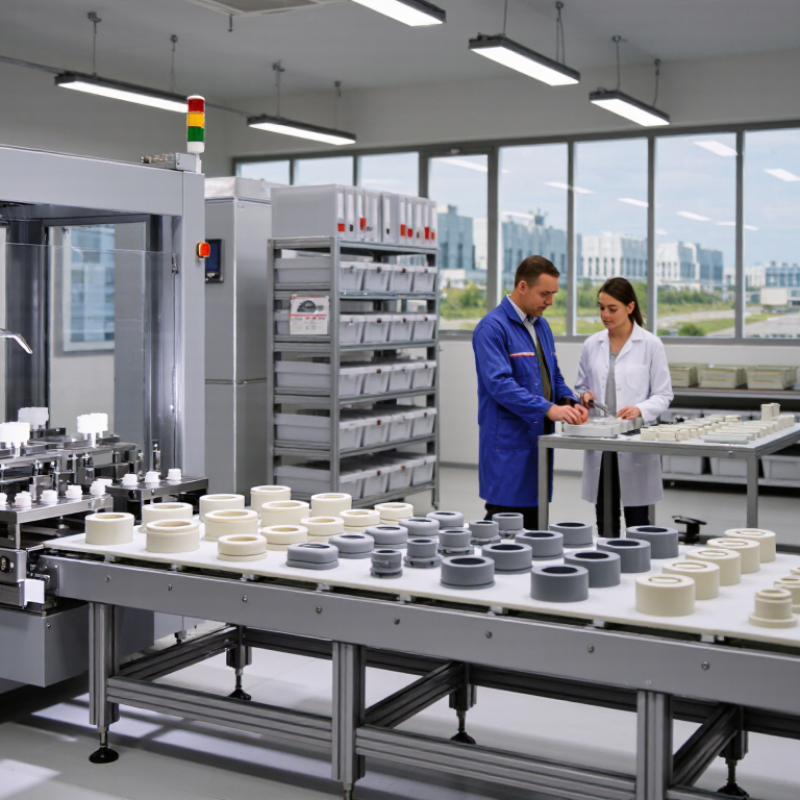
2026 Top RTV Molding Manufacturers for Global Buyers?

Understanding RTV Molding and Its Global Market in 2026

RTV molding uses room-temperature-curing silicone to reproduce a pattern as a flexible mold or part. A master pattern is surrounded by liquid silicone, which cures around its shape. The finished mold can capture fine texture, shallow grooves, and small lettering. It is commonly used for prototypes, short production runs, and complex shapes that are difficult to release from rigid tooling. Small details matter.

In 2026, global buyers are comparing more than quoted unit prices. Silicone hardness, mold life, dimensional consistency, and shipping time can all affect the real cost of a project. Suppliers may offer different curing methods and material options, so buyers should request technical data and clarify how samples will be checked. Lead times vary. A single successful sample does not prove that every later batch will match it.

RTV molding can shorten development work, but it is not a perfect shortcut. Thin walls may tear, and undercuts can complicate demolding. A detailed drawing, clear tolerance requirements, and a physical sample help reduce misunderstandings across borders. It is also sensible to ask how tooling changes are handled after approval. Buyers sometimes focus too heavily on the first mold cost; repeatability and communication deserve equal attention.


How to Evaluate RTV Molding Manufacturers for Global Buyers

Choosing an RTV molding manufacturer requires more than comparing unit prices. Start with the part itself: note its dimensions, expected tolerances, surface finish, and working environment. Ask how the supplier controls silicone hardness, cure conditions, and material consistency. These details affect whether parts fit and perform reliably.

Request sample parts and inspect them under realistic conditions. Check edges for flash, measure critical features with suitable tools, and compare results across several pieces. Ask for documented inspection methods, material traceability, and records from previous production runs. A polished brochure is not proof. Clear, specific answers matter more.

Discuss tooling ownership, mold maintenance, lead times, and how production changes are approved. For cross-border orders, confirm packaging, shipping estimates, and who provides updates if a schedule slips. A small pilot run can reveal problems before larger orders begin. Not every supplier will offer perfect documentation, and a low quote may hide gaps in quality checks. Decide which risks you can accept, then compare manufacturers against the same written requirements.

Leading RTV Molding Manufacturers and Their Core Capabilities

RTV molding manufacturers differ most in process control, not simply machine count. Strong suppliers can select silicone hardness, manage vacuum degassing, and control cure schedules for the part’s geometry. Ask how they handle thin walls, undercuts, and trapped air. A small test casting can reveal surface defects before production begins. That matters.

Grand View Research valued the global silicone market at USD 18.5 billion in 2023 and projected 6.3% annual growth from 2024 to 2030. The report covers silicone broadly, not RTV molding alone, so it signals material demand rather than supplier quality. For buyer comparisons, review documented capability: mold-design support, batch traceability, dimensional inspection, and post-cure control. Request sample inspection records and clarify acceptable tolerances before quoting. Still, a polished sample does not prove repeatability. Ask for results across multiple production batches, especially when parts must fit tightly or seal against another surface.

2026 Top RTV Molding Manufacturers for Global Buyers? - Leading RTV Molding Manufacturers and Their Core Capabilities

This comparison describes common RTV silicone supplier capability profiles, not named or ranked companies. Processes, tolerances, production volumes, and certifications vary by facility and should be confirmed for each project.

Supplier Capability Profile Core Capabilities Typical Strengths Suitable Project Needs What Buyers Should Verify
Prototype and Short-Run Specialist Room-temperature-vulcanizing (RTV) silicone mold making and casting; low-volume production; design iteration. Can support early design checks and complex shapes without the investment required for production tooling. Functional prototypes, samples, pilot builds, and small quantities of parts. Sample approval process, mold life, achievable detail, material properties, and repeatability between batches.
Liquid Silicone Rubber (LSR) Molder Metered mixing and injection molding of two-part liquid silicone rubber, generally using heated production tooling. Well suited to repeatable production of silicone components; can support automated processing and multi-cavity tooling. Recurring production of seals, gaskets, protective components, and other molded silicone parts. LSR grade availability, tooling design, process controls, cavity consistency, inspection plans, and production capacity.
Compression and Transfer Molding Specialist Compression or transfer molding of silicone compounds using matched tools and controlled heat-curing processes. Can accommodate a range of part geometries and compound formulations; suitable for established production programs. Custom-shaped components where material selection, part design, and production economics favor these processes. Flash and trimming methods, tooling maintenance, cure controls, dimensional inspection, and material traceability.
Complex-Geometry and Insert-Molding Specialist Silicone molding with inserts, bonded components, undercuts, or other demanding tool and part features. Can engineer mold design and assembly steps around complex interfaces and functional features. Parts combining silicone with metal or rigid substrates, or designs with challenging geometry. Insert preparation, bonding method, retention strength, interface inspection, and design-for-manufacture feedback.
Regulated-Industry Supplier Silicone molding supported by documented procedures, controlled records, and customer-specific quality requirements. May offer stronger documentation and change-control support for applications with formal compliance needs. Medical, food-contact, or other regulated applications when the supplier and material meet the applicable requirements. Current certificates and their scope, material compliance evidence, validation records, traceability, and applicable regulatory responsibilities.
Large-Part and Industrial Molder Manufacturing processes and tooling intended for comparatively large silicone parts or industrial components. Experience planning material handling, tooling, curing, and inspection for larger or heavier parts. Industrial covers, diaphragms, protective components, and other larger custom-molded parts. Maximum tool and part dimensions, handling capability, cure uniformity, dimensional controls, and shipping protection.

Comparing Materials, Processes, Quality Systems, and Lead Times

2026 Top RTV Molding Manufacturers for Global Buyers

Comparing Materials, Processes, Quality Systems, and Lead Times

Selecting an RTV molding manufacturer starts with the material, not the brochure. Silicone grade, hardness, tear strength, and cure behavior all affect part performance. For a flexible seal, ask how the supplier controls material batches and verifies hardness. A test coupon helps. It is a small detail, but useful.

Process capability matters just as much. Ask whether the team can manage vacuum degassing, complex undercuts, and thin walls without trapping air. A sample with a 1.5-millimeter wall can reveal details that a large, simple part will not. Review tolerances and surface finish together. A perfect-looking prototype may still vary after repeated production cycles.

Quality systems should connect inspection results to specific batches. Request dimensional reports, cure records, and a clear method for handling nonconforming parts. Lead times need the same scrutiny: separate mold fabrication, sample approval, and production scheduling. Ask what could delay each stage. Fast estimates are tempting, but material availability or a late design change can shift delivery. No checklist removes every uncertainty; even a careful supplier comparison can miss a weak point in the first trial.

How to Select and Verify a Supplier for Your Application

Selecting an RTV molding supplier starts with the part, not the catalogue. Define the required hardness, tear resistance, working temperature, cure time, and expected service life. Grand View Research’s Silicone Market Size, Share & Trends Analysis Report estimated the global silicone market at USD 18.5 billion in 2023, with projected growth through 2030. That broad market figure signals activity, not supplier competence. Ask whether the manufacturer regularly handles your specific cure chemistry and part geometry.

Request material data sheets, batch certificates, and test methods. Compare reported values under consistent conditions: ASTM D412 covers tensile properties, while ASTM D624 measures tear strength of vulcanized rubber. Check whether the supplier can explain shrinkage, post-cure needs, and how pigments or fillers may affect performance. Samples can flatter. A spreadsheet can still mislead.

Verify the process with a small production-representative trial. Use your own mold where possible, and inspect flash, bubbles, dimensional variation, and cure consistency across several parts. Ask for lot traceability and documented inspection criteria, then confirm that the delivered compound matches the approved sample. A supplier’s written controls matter, but so does seeing how defects are recorded and corrected. No single certificate replaces testing against your application’s actual conditions.