How to Use Ito Conductive Materials for Enhanced Electrical Performance?
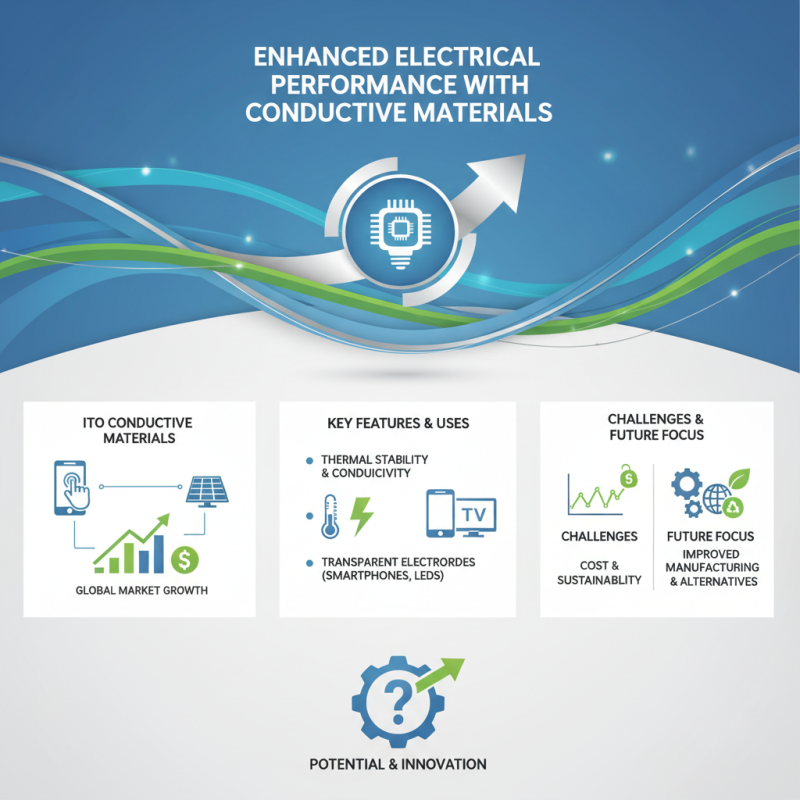
In recent years, the demand for high-performance conductive materials has surged. Ito Conductive materials, primarily indium tin oxide, have emerged as a leading choice in electronics, optics, and energy sectors. According to a report by MarketsandMarkets, the global market for conductive materials is expected to reach $25 billion by 2025, with Ito Conductive leading in applications for touch screens and solar cells.
Ito Conductive materials offer remarkable thermal stability and excellent electrical conductivity. They are widely used in transparent electrodes, essential for devices like smartphones and LED displays. However, while their advantages are notable, challenges persist in their production and cost-efficiency. Many manufacturers struggle with sourcing raw materials sustainably. A report by Grand View Research states that the price of indium can fluctuate significantly, affecting the overall cost of Ito Conductive products.
As industries strive for innovation, the limitations of Ito Conductive materials must be addressed. Improved manufacturing techniques are crucial. Relying heavily on indium raises questions about resource sustainability. Future research should explore alternatives or enhancements to maintain performance while ensuring environmental responsibility. The potential of Ito Conductive materials is immense, but it requires thoughtful reflection and action to realize their full capabilities.
Understanding the Basics of Ito Conductive Materials
Indium tin oxide (ITO) is a widely used conductive material in various applications. It is especially important in the development of transparent conductive films. These films are essential in displays and solar cells. ITO is valued for its high conductivity and transparency. In fact, it exhibits a transmittance of over 80% in the visible range. This makes it a popular choice for touchscreen technologies.
Understanding the properties of ITO is crucial when employing it for enhanced electrical performance. The material's electrical properties are influenced by its composition. Typically, ITO consists of a mixture of indium oxide and tin oxide. This combination improves the charge carrier concentration. Research indicates that increasing the tin content can enhance conductivity. However, excessive tin can lead to reduced transparency. This presents a trade-off between conductivity and visibility.
Processing conditions play a significant role in ITO's effectiveness. Factors such as temperature and coating techniques affect the final performance. For example, sputtering is a common method to deposit ITO films. Reported studies show that optimizing sputtering conditions can yield better results. A mismatch in parameters can lead to weak adhesion or uneven surfaces. Each application may need tailored methods to achieve the desired balance between conductivity and optical quality.
Key Properties of Ito for Enhanced Electrical Performance
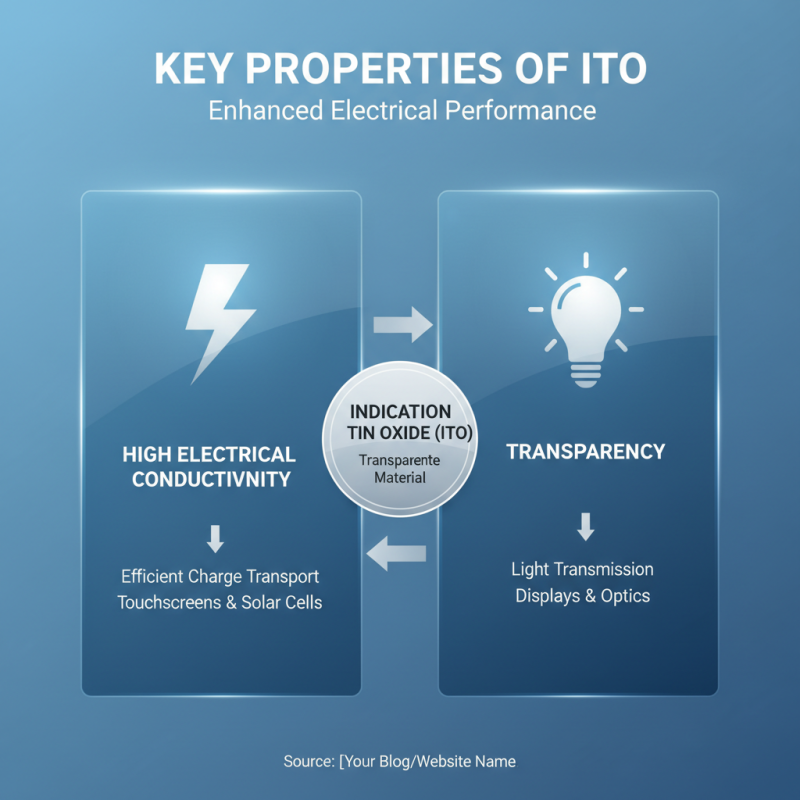
Indium Tin Oxide (ITO) is a popular transparent conductive material. Its unique properties make it essential in various applications. One of the key advantages of ITO is its high electrical conductivity. This feature ensures efficient charge transport in devices like touchscreens and solar cells. The transparency of ITO allows light to pass through while maintaining conductivity.
Tips: Ensure proper thickness when applying ITO. Too thin can reduce conductivity. On the other hand, overly thick layers may impair transparency.
Another notable property is its stability under different environmental conditions. ITO maintains performance even in humid atmospheres. However, it can be sensitive to mechanical stress. Handle with care to prevent cracks or damage.
Tips: Consider using protective coatings on ITO surfaces. This can enhance durability and prolong device lifespan. Regular inspections for wear and tear can also help.
Lastly, the ease of fabrication is a bonus. ITO can be applied through various methods, including sputtering and chemical deposition. However, achieving the optimal fabrication conditions is not always straightforward. It's essential to refine your technique to enhance performance.
Applications of Ito Conductive Materials in Electronics
ITO conductive materials have a wide range of applications in electronics, enhancing device performance significantly. One notable usage is in touchscreens. ITO films serve as transparent electrodes, allowing users to interact with devices effortlessly. They facilitate accurate touch detection.
Additionally, ITO coatings are crucial in solar cells. They help improve light absorption efficiency. This leads to better energy conversion rates. In lighting technology, ITO materials are used in OLEDs. They contribute to better light emission and color quality.
Challenges exist with ITO materials. Their brittleness can affect device durability. Sometimes, the production costs are high. Researchers are exploring alternatives to address these issues. Enhancing the electrical performance of ITO involves considering these factors. Balancing performance and practicality is essential for the future of electronics.
Techniques for Integrating Ito into Electrical Systems
Integrating indium tin oxide (ITO) into electrical systems can significantly enhance their performance. ITO is known for its excellent conductivity and transparency. These properties make it ideal for various applications, including touch screens and solar cells. However, working with ITO presents challenges requiring thoughtful approaches.
One effective technique is layering ITO on different substrates. This method ensures that the electrical performance is optimized. The layer thickness should be precise to achieve desired conductivity levels. Too thick a layer might lead to unwanted resistance. Conversely, too thin can compromise stability. Experimenting with different thicknesses can lead to improved outcomes.
Tips for integration include using proper adhesion techniques. Ensure surfaces are clean and prepared. Contaminants can hinder the bonding process and affect overall performance. Additionally, maintaining a controlled environment during application is vital. Fluctuations in temperature and humidity can alter material properties. In some cases, technicians might need to rethink their approach if results are not satisfactory. Iterate on your techniques and adjust parameters to find the best solution.
Choosing the right deposition method also matters. Techniques like sputtering or chemical vapor deposition can yield different results. It’s essential to test and evaluate each method. Some might find that a combination of methods produces the best electrical characteristics. Experimentation is key; don’t shy away from trial and error.
Future Trends and Innovations in Ito Conductive Materials
ITO conductive materials are gaining attention for their potential in various applications. These materials are primarily made of indium tin oxide, known for excellent electrical performance and transparency. One emerging trend is their use in flexible electronics. Lightweight and adaptable, ITO can now conform to different shapes. This flexibility opens new doors in wearable technology and electronic devices.
Another exciting innovation is the development of hybrid ITO materials. Researchers combine ITO with other conductive substances to enhance performance. This blending often results in improved conductivity and durability. For instance, incorporating organic materials could lead to better energy efficiency. However, finding the right balance between materials can be challenging.
Sustainability is becoming a focal point in the ITO industry. As demand increases, the quest for more eco-friendly alternatives intensifies. Recyclability and sourcing of raw materials are critical issues that need addressing. Future improvements may require collaboration across disciplines. This approach might foster the necessary innovations in ITO applications. The path forward is promising, yet complex.