





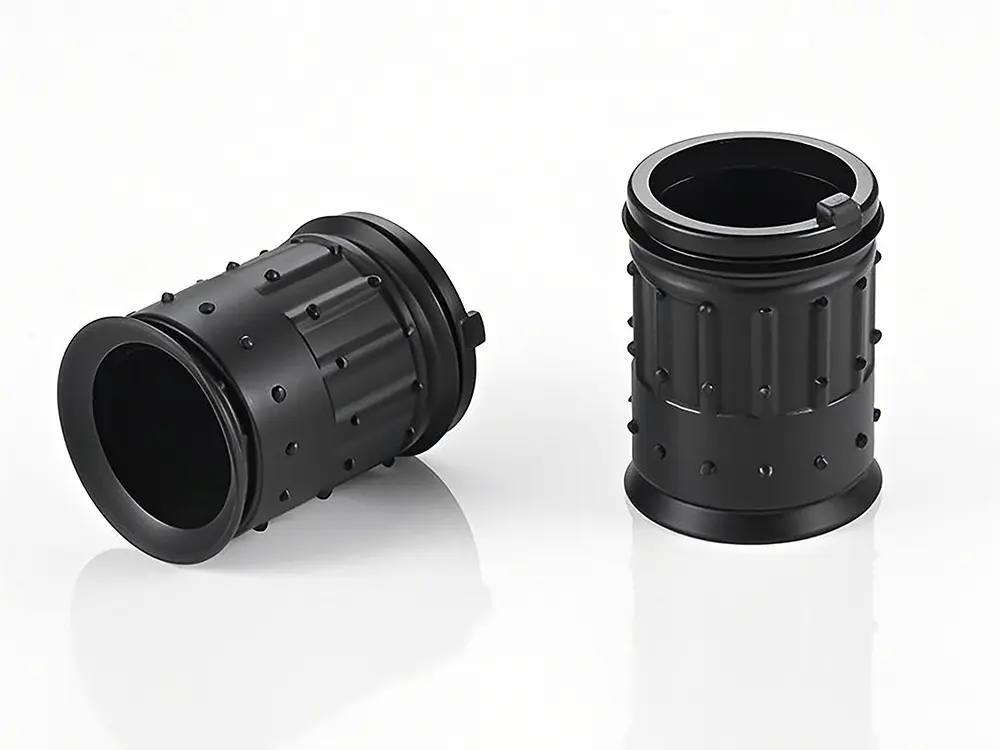
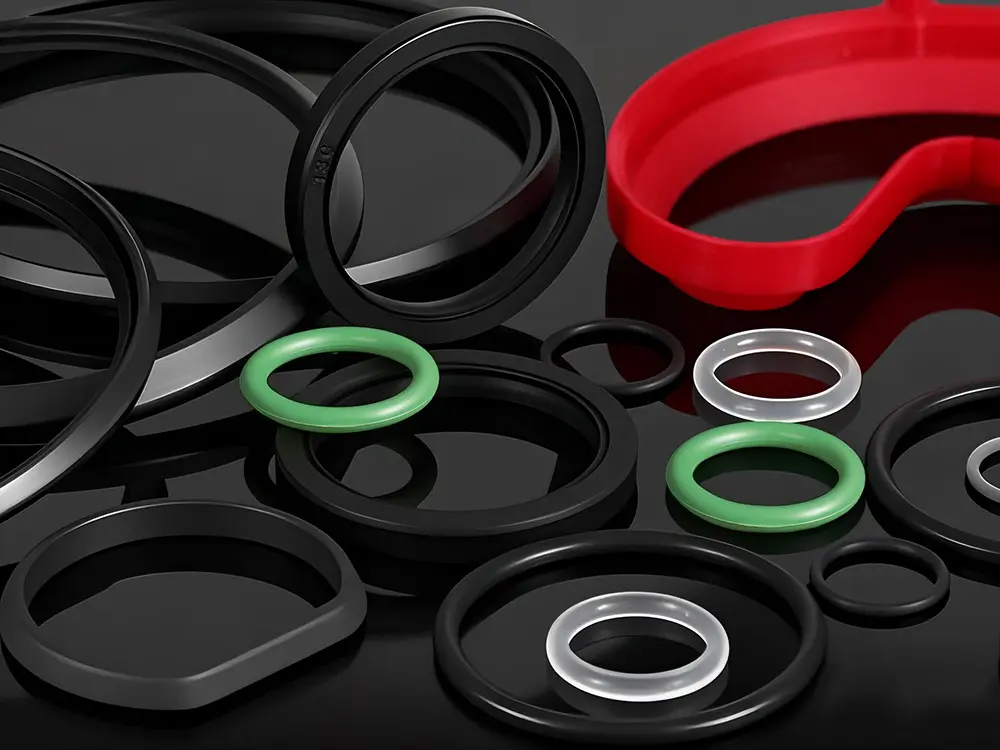
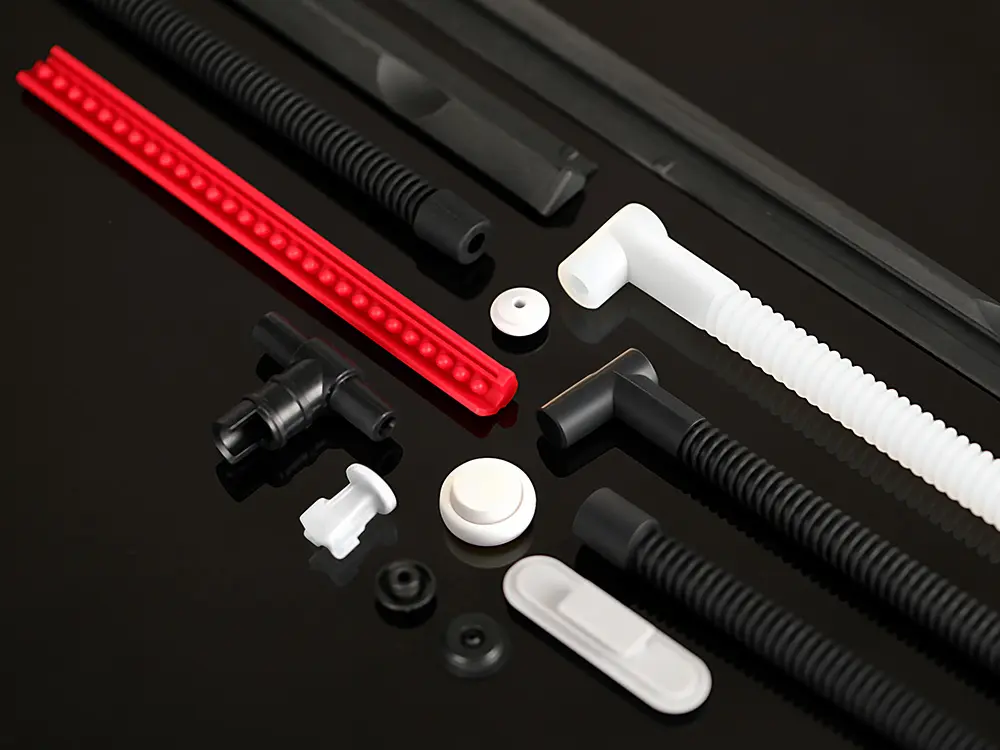
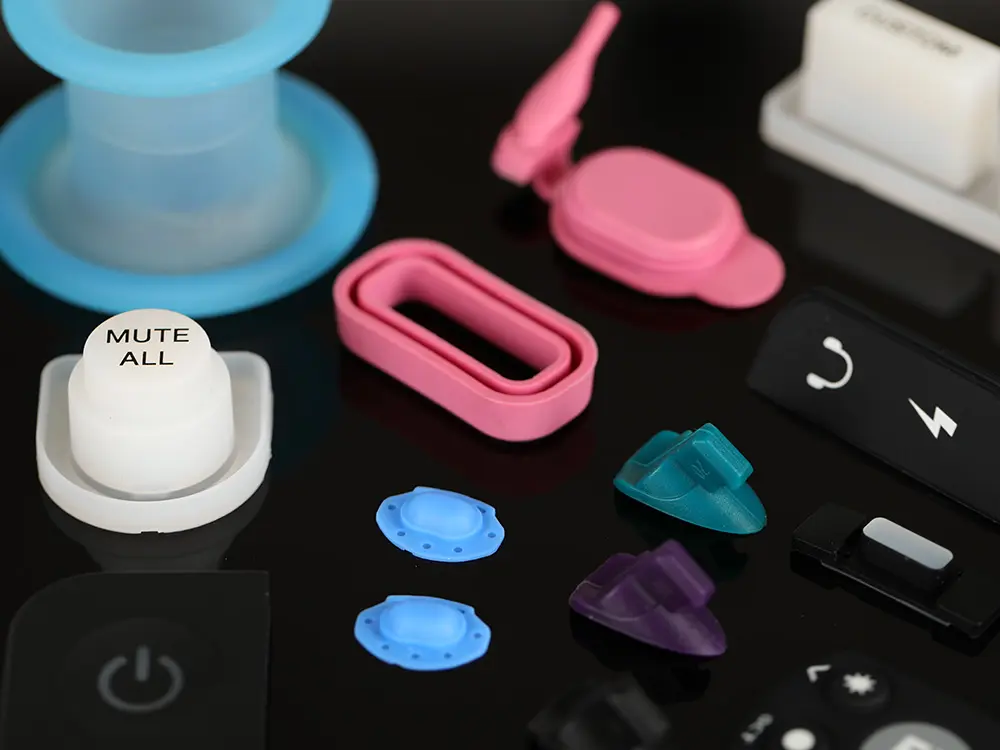
Custom Rubber Moulded Parts
WHAT DO WE DO?
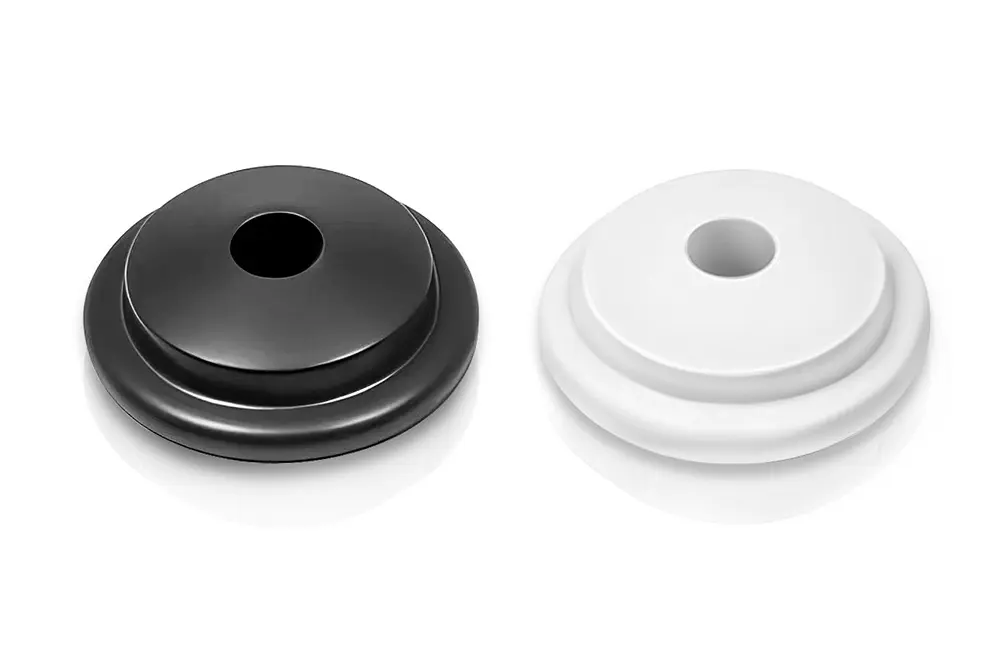
Rubber Grommets
Rubber Bumpers
Rubber Gaskets
Rubber Seals
O-rings
Rubber Stoppers
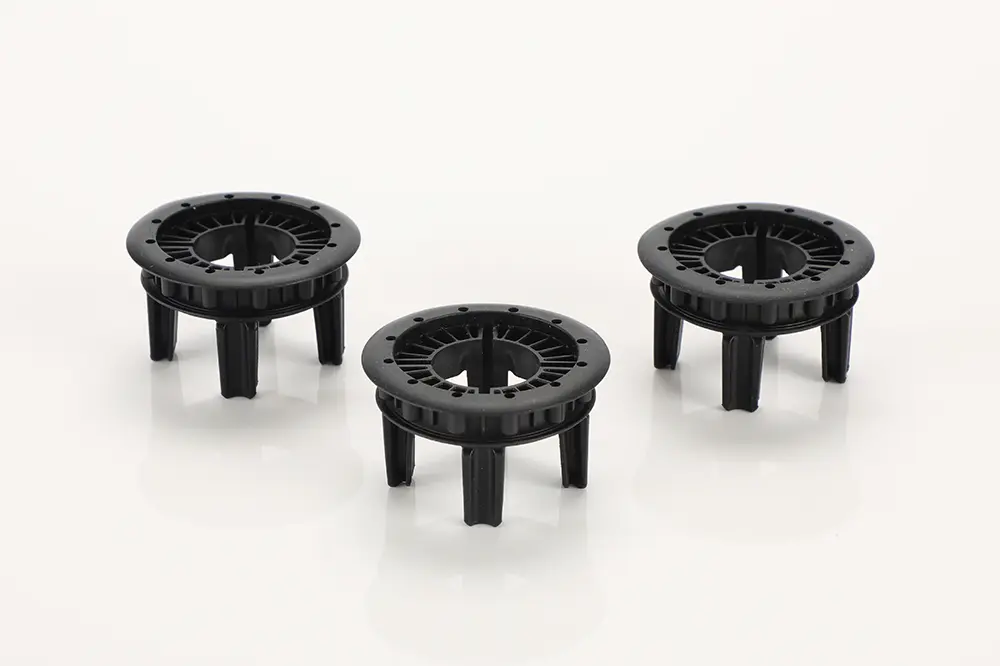
Rubber Mounts
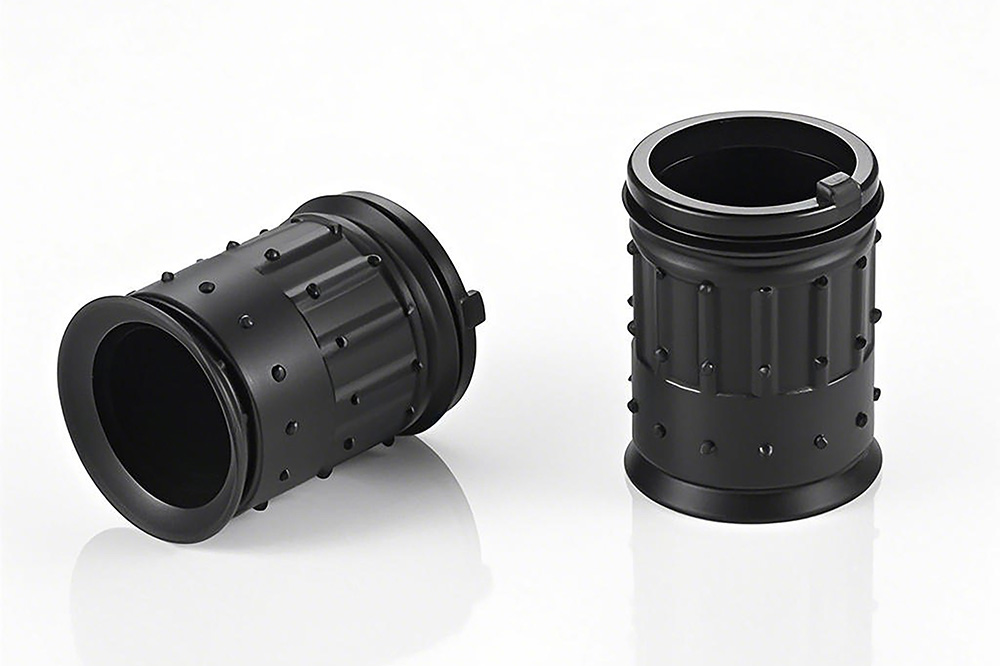
Rubber Bushings
Rubber Diaphragms
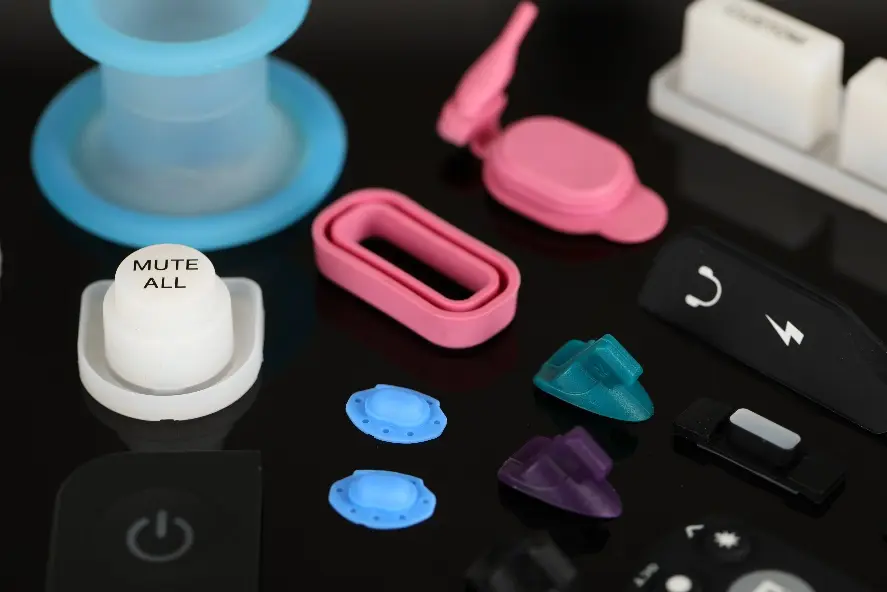
Custom-moulded components
Key characteristics
Excellent Resistance to Mineral and Fuel Oils
Outperforms natural rubber in oil and fuel resistance. Maximum operating temperature is 120°C (short-term up to 150°C).
Superior Abrasion Resistance
Delivers 2–3 times the wear resistance of natural rubber. However, it has poor ozone and weather resistance, requiring the addition of protective agents for outdoor use.
Moderate Gas Permeability
Offers better air tightness than EPDM. Low-temperature brittleness occurs between -20°C and -30°C.
Cost-Effective Alternative to FKM
Priced at only 1/8 to 1/10 of FKM, but not suitable for use with strong oxidizing acids or ketone/ester solvents, where it may swell and fail.
Material Selection Guide
Hardness |
40-50HSA |
50-60SHA |
60-70SHA |
70-80SHA |
80-90SHA |
Tensile Strength |
5-12MPa |
8-16MPa |
12-22MPa |
15-25Mpa |
18-30Mpa |
Elongation |
400-700% |
300-500% |
200-400% |
100-250% |
50-150% |
Characteristics |
Exceptional elasticity and conformity, with low cost and easy processing |
Best value in oil resistance — the go-to solution for the automotive and home appliance industries |
Combining excellent wear resistance and fatigue durability—ideal for demanding applications |
High rigidity and excellent pressure resistance, with a trade-off in elasticity. |
With hardness comparable to plastic, this material excels in abrasion resistance while being prone to brittleness. |
Application Area |
Ideal for sealing and damping. Seals, Gaskets, Rubber Pads, Bumpers, Vibration mounts |
Shaft Seals, O-rings, Tubes, Grommets and Gaskets |
Dynamic sealing and wear component. Rotary shaft oil seals, Water pump seals, Industrial roller coatings, and Conveyor belts |
Ideal for high-pressure, extrusion-resistant component. hydraulic cylinder piston seals, valve seats, and heavy-duty support pad |
Best suited for high-strength, wear-critical parts. Transmission Shims and Heavy Equipment Support Rings. |
Key characteristics
Excellent Weather and Ozone Resistance
Ideal for outdoor use with a service life exceeding 15 years. However, it is not resistant to mineral oils or fuels, which may cause swelling and failure.
High-Temperature Steam Resistance
Can withstand continuous exposure to steam up to 150°C. Adhesion to metal is weak without the use of tackifiers.
Outstanding Electrical Insulation
Features a high volume resistivity (>10¹⁵ Ω·cm), but poor gas barrier properties make it unsuitable for vacuum sealing applications.
Superior Low-Temperature Flexibility
Remains flexible below -50°C. However, slow vulcanization results in lower production efficiency compared to NBR.

Material Selection Guide
Hardness |
40-50HSA |
50-60SHA |
60-70SHA |
70-80SHA |
80-90SHA |
Tensile Strength |
7-12MPa |
10-16MPa |
14-22MPa |
18-28Mpa |
20-35Mpa |
Elongation |
500-800% |
400-600% |
250-450% |
150-300% |
80-200% |
Characteristics |
Excellent rebound resilience, compression set recovery, and low-temperature performance |
The best value-for-performance range, serving as a key material for weather and ozone resistance |
Offers the best overall balance of strength, elasticity, and aging resistance. |
Combines high rigidity with low compression set, and withstands hot air up to 120°C |
Offers abrasion resistance comparable to plastics and outstanding dimensional stability under stress |
Application Area |
Ideal for ultra-soft sealing and vibration damping applications. Door and window seals, low-pressure water seals, and cushioning pads |
General-purpose sealing material for hoses, water lines, construction joints, and waterproof appliance gaskets |
Suitable for dynamic sealing and industrial components, including automotive seals, HVAC O-rings, and conveyor roller overmoulding |
Ideal for high-pressure, weather-resistant sealing applications. Automotive engine bay seals, Photovoltaic panel frame gaskets, and high-voltage insulation covers |
Ideal for high-load, wear-intensive applications including roller surface coatings, elevator guide shoes, and shock absorber stoppers |
Key characteristics:
Flame Retardancy and Moderate Oil Resistance
Features self-extinguishing properties with an LOI ≥35% and UL94 V-0 rating. Offers moderate oil resistance, though not as high as NBR or HNBR
Weather & UV Resistance
Excellent resistance to ozone and ultraviolet light, with an outdoor lifespan exceeding 10 years. Continuous use temperature up to 100°C (short-term up to 120°C).
Chemical and Environmental Durability
Superior acid, alkali, and weather resistance compared to NBR. Low-temperature brittleness down to -35°C (less than EPDM). Excellent adhesion to metal without primer. Crystallizes during storage and must be preheated to 50°C before processing.
Material Selection Guide
Hardness |
40-50HSA |
50-60SHA |
60-70SHA |
70-80SHA |
80-90SHA |
Tensile Strength |
6-12MPa |
10-18Mpa |
15-25Mpa |
20-30Mpa |
22-35Mpa |
Elongation |
500-800% |
400-600% |
250-450% |
150-300% |
80-200% |
Characteristics |
Excellent rebound resilience and flex fatigue resistance, with strong adaptability to low temperatures |
Optimal value choice for weather- and flame-resistant applications |
Optimally balanced for strength, ozone durability, and flame resistance |
High stiffness and excellent shape retention under stress—ideal for applications exposed to hot air up to 120°C |
Self-extinguishing and wear-resistant—can replace asbestos products safely and efficiently |
Application Area |
Ideal for flexible seal and damping components, including construction expansion joints, soft shock absorber pads, and waterproof seam layers |
General-use sealing and hose material for AC rings, water hose exteriors, and cable sheaths |
Ideal for dynamic seals and heavy-duty industrial use—including door and window gaskets for vehicles, conveyor belt top layers, and abrasion-resistant lining materials |
High-strength, weather-resistant components for use in sealing gaskets, fire-rated door and window seals, and bridge bearing pads |
Ideal for high-stress, flame-retardant applications—used in brake pad liners, fireproof conveyor belt rollers, and insulated load-bearing pads |
Key characteristics
Exceptional Heat Resistance
Withstands continuous use at 230°C and short-term peaks up to 300°C. However, standard grades become brittle around -15°C.
Outstanding Chemical Resistance
A top performer in resisting acids, alkalis, and solvents. Elasticity is lower than that of silicone or EPDM at the same hardness level.
Ultra-Low Permeability
Offers extremely low fuel permeability (<1g/mm²·24h), but comes with a significantly higher cost—3 to 5 times that of HNBR.
Flame Retardant & Self-Extinguishing
High LOI (≥65%) ensures excellent flame resistance. Processing is complex and typically requires dual-stage vulcanization.
Material Selection Guide
Hardness |
50-60SHA |
60-70SHA |
70-80SHA |
80-90SHA |
Tensile Strength |
10-18Mpa |
12-20MPa |
15-25Mpa |
29-30+Mpa |
Elongation |
200-400% |
150-300% |
100-250% |
50-150% |
Characteristics |
Offers outstanding flexibility and surface conformity, making it ideal for sealing in low-pressure or highly deformable environments |
Balanced strength and elasticity—ideal for static sealing in chemical and automotive systems. |
Top-tier performance blend—wear-resistant, extrusion-proof, and flexibly rigid |
Ultra-rigid, compression-resistant, and built to endure high pressure and wear |
Application Area |
Highly flexible and form-fitting, ideal for low-pressure or shape-shifting sealing needs |
Versatile material for static sealing—commonly used in O-rings (low pressure/static), flat gaskets, and profile sealing strips |
Dynamic sealing material for oil seals, pump diaphragms, and fuel system components |
High-pressure, wear-resistant solution for valve seals, rollers, liners, and rigid supports |
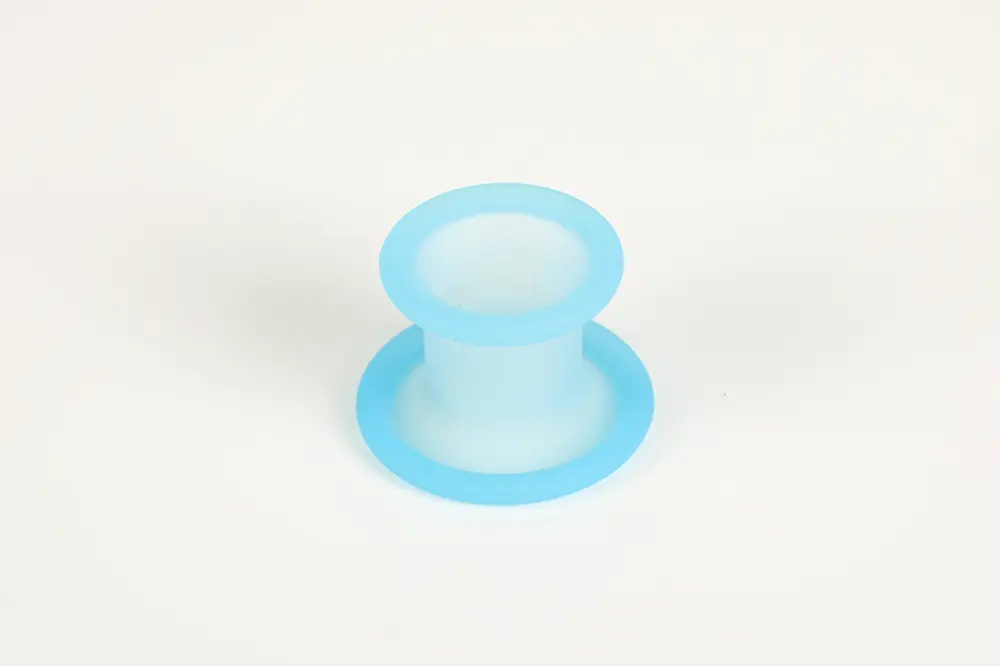
Key characteristics
Extreme Temperature Resistance
Silicone rubber outperforms most synthetic rubbers with continuous operation from -60°C to +230°C and short-term peaks up to 250°C
Biocompatible & Inert
Unlike most synthetic rubbers, silicone is inert, non-toxic, and FDA-compliant, making it uniquely suited for medical, food-grade, and high-purity applications
Consistent Flexibility
Unlike elastomers like NBR or CR, which stiffen in cold, silicone maintains consistent flexibility and low compression set in both freezing and high-heat conditions
Outstanding Weather Durability
Superior UV, ozone, and aging resistance—ideal for outdoor use
Material Selection Guide
Hardness |
0-10HSA |
10-30HSA |
30-50SHA |
50-70SHA |
70-90SHA |
Tensile Strength |
0.2-2.0Mpa |
1.0-4.0Mpa |
4.0-8.0Mpa |
6.0-10.0Mpa |
8.0-12.0Mpa |
Elongation |
800-1500% |
500-1000% |
300-700% |
150-400% |
50-200% |
Characteristics |
Simulates human tissue texture; excellent shape retention with <5% compression set |
Extremely soft and biologically inert; certified to USP Class VI standards |
Wide temperature range (-60°C to +230°C) and food-grade compliant |
High clarity, heat aging resistance, and insulation |
Low compression set with excellent resistance to radiation and ozone |
Application Area |
Ideal for soft-touch, shock-absorbing applications—used in synthetic organ models, rebound cushions, and anti-vibration pads for precision instruments. |
Ideal for soft medical applications—suitable for pacifiers, medical seals, and protective sleeves for cosmetic instruments |
Ideal for food-safe applications—commonly used in baking liners, kitchenware grips, and seals for coffee makers |
Engineered for high-heat environments—ideal for engine seals, iron gaskets, and LED enclosure sealing |
Ideal for demanding environments—used in structural insulators, heat-transfer rollers, and aerospace-grade seals |
Key characteristics
Abrasion Resistance & Mechanical Strength
Superior wear resistance compared to natural rubber (DIN abrasion loss reduced by 15–30%). However, elasticity and tensile strength are 10–20% lower than NR.
Wet Grip & Chemical Resistance
Excellent anti-slip performance, especially in wet conditions (e.g., tire traction). Poor resistance to oils and solvents, with swelling exceeding 30% upon exposure.
Weatherability & Ozone Resistance
Moderate weather resistance—requires antioxidants for stability. Poor ozone resistance, necessitating protective waxes for outdoor use.
Processing & Bonding Characteristics
Good processing flow—well-suited for injection and compression molding. Adhesion is weak and requires cobalt salts or resorcinol-silica systems for effective bonding.
Material Selection Guide
Hardness |
40-50HSA |
50-60SHA |
60-70SHA |
70-80SHA |
80-90SHA |
Tensile Strength |
10-18Mpa |
15-24Mpa |
18-28Mpa |
20-30Mpa |
18-25Mpa |
Elongation |
500-800% |
400-600% |
300-500% |
150-350% |
80-200% |
Characteristics |
Soft feel with tough wear—Akron abrasion < 0.3 cm³ |
ideal for economical vibration damping pads. |
Balanced wear, wet grip, and rolling efficiency |
High hardness provides excellent resistance to compression deformation |
Rigid, compression-resistant—precision surface finish required |
Application Area |
High-rebound cushioning for shoes, pads, and low-heat shock absorbers |
General wear-resistant solution for treads, belts, and shoe soles |
Durable material for heavy-duty applications—commonly used in industrial roller coverings, conveyor rollers, and brake pedal surfaces |
Used in high-hardness structural components such as flooring inserts, printer roller cores, and heavy equipment footpads |
Ultra-hard wear parts for mining liners, loader tires, and heavy-duty pads |
Key characteristics
Elasticity & Dynamic Behavior
Delivers excellent elasticity with a rebound rate exceeding 80%. However, it has poor resistance to oils and solvents, with swelling and failure occurring upon contact.
Tensile Strength & Environmental Resistance
Offers ultra-high tensile strength (up to 35 MPa), but limited resistance to ozone and UV exposure. Outdoor applications require protective additives.
Tear Resistance & Thermal Stability
Exceptional tear strength (>50 kN/m). Suitable for continuous use up to 70°C and short-term exposure up to 100°C.
Cold Flexibility & Aging
Maintains outstanding low-temperature flexibility with a brittle point as low as -70°C. However, it is prone to aging—may become sticky and hard over time. Antioxidants (e.g., 4010NA) are recommended to enhance longevity.

Material Selection Guide
Hardness |
30-40HSA |
40-50HSA |
50-60SHA |
60-70SHA |
70-85SHA |
Tensile Strength |
15-25Mpa |
18-30Mpa |
12-22MPa |
25-35+Mpa |
20-30Mpa |
Elongation |
700-1000% |
600-800% |
500-700% |
400-600% |
200-400% |
Characteristics |
high rebound resilience (>85%) and energy absorption capabilities |
durability under cyclic stress with minimal heat generation. |
overall combination of mechanical strength, flexibility, and wear resistance |
high tensile strength combined with exceptional tear resistance exceeding 50 kN/m |
Formulated for higher stiffness at the cost of flexibility—optimized for improved abrasion resistance. |
Application Area |
Ideal for high-performance damping and sealing applications. Pneumatic shock absorber bladders, mill liners, and energy-absorbing gaskets |
excels in dynamic applications such as tire inner liners, coupling buffers, flexible seals, and medical-grade stoppers |
General wear-resistant solution for conveyor belts and industrial roller linings |
Ideal for heavy-duty applications—used in structural bridge supports, crawler pad linings, and screening mesh systems. |
Used in rigid structural components such as printing roller cores, heavy-duty equipment base pads, and high-rigidity gears |
Key characteristics
Excellent Resistance to Mineral and Fuel Oils
Outperforms natural rubber in oil and fuel resistance. Maximum operating temperature is 120°C (short-term up to 150°C).
Superior Abrasion Resistance
Delivers 2–3 times the wear resistance of natural rubber. However, it has poor ozone and weather resistance, requiring the addition of protective agents for outdoor use.
Moderate Gas Permeability
Offers better air tightness than EPDM. Low-temperature brittleness occurs between -20°C and -30°C.
Cost-Effective Alternative to FKM
Priced at only 1/8 to 1/10 of FKM, but not suitable for use with strong oxidizing acids or ketone/ester solvents, where it may swell and fail.
Material Selection Guide
Hardness |
50-60SHA |
60-70SHA |
70-80SHA |
80-90SHA |
Tensile Strength |
12-18Mpa |
15-25Mpa |
20-35Mpa |
25-40+Mpa |
Elongation |
300-500% |
200-400% |
100-250% |
50-150% |
Characteristics |
Outstanding elasticity in cold environments with superior resistance to flow deformation |
Balances oil resistance, wear resistance, and elasticity—a core material in automotive applications |
Combines high strength with low compression set, providing reliable performance in high-temperature oil environments up to 150°C |
Provides ultra-high wear and tear resistance, serving as a metal replacement to reduce operational noise |
Application Area |
used in cold-resistant oil seals, vibration damping bushings, and internal linings for flexible piping systems |
Versatile sealing material for oil and fuel systems—ideal for crankshaft seals, gearbox oil seals, fuel hose O-rings, and hydraulic gaskets |
High-strength dynamic seal for engines, hydraulics, and industrial pumps |
used in drilling seals, rollers, drive belts, and valve seats |
Performance Highlights & Quality Standard
Feature |
Specifications |
Note |
Hardness Range |
10SHA-90SHA |
Custom ultra-soft to ultra-hard options |
Color Consistency |
ΔE<1.00 |
Matched to Pantone or sample standards |
Food-Grade Compliance |
FDA |
Available upon request |
Medical-Grade Compliance |
USP Class VI & ISO 10993 |
Available upon request |
Flame-Retardant Material |
UL94 V0 |
Available upon request |
Odor Control |
≤ 2.0 (DIN 10955) |
Low-odor product |
Low VOC Emissions |
≤ 0.1 mg/m²·h |
Low-VOC product |
Dimensional Precision |
Wall thickness min. 0.3 mm, O-ring misalign. <0.05 mm |
Tight tolerances available |
Surface Finish |
Mirror-level VDI 3 (0.1–0.2 μm) |
Surface Finish can be discussed on a case-by-case basis |
High Temperature Resistance |
-50°C to +200°C |
For continuous operation |
Electrical insulation |
Breakdown voltage ≥ 25 kV/mm |
Excellent insulating properties |
-
Automatic Flash Trimming
Precisely removes excess material after molding, ensuring clean edges and consistent geometry. -
Cryogenic Deflashing
-
Parylene Coating
-
UV Exposure Treatment
-
PU Spraying
-
Silicone Soft-Touch Coating
-
Pad & Screen Printing
-
Heat Transfer Printing
-
Laser Engraving
-
Plasma Surface Treatment
-
Ultrasonic & Adhesive Assembly
Application Area
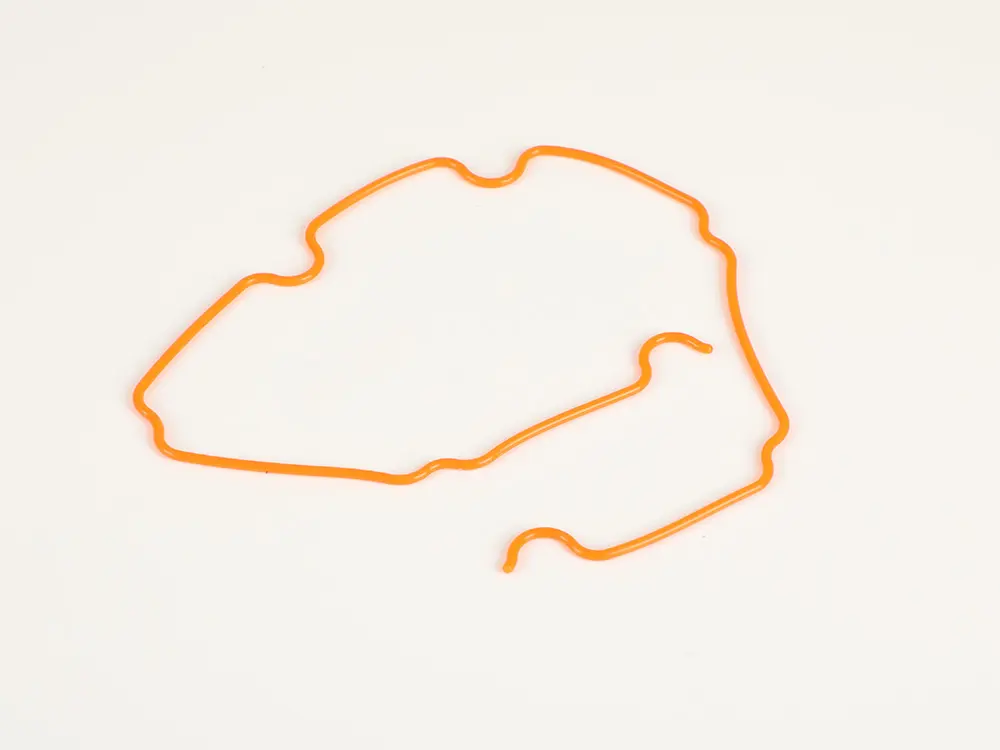
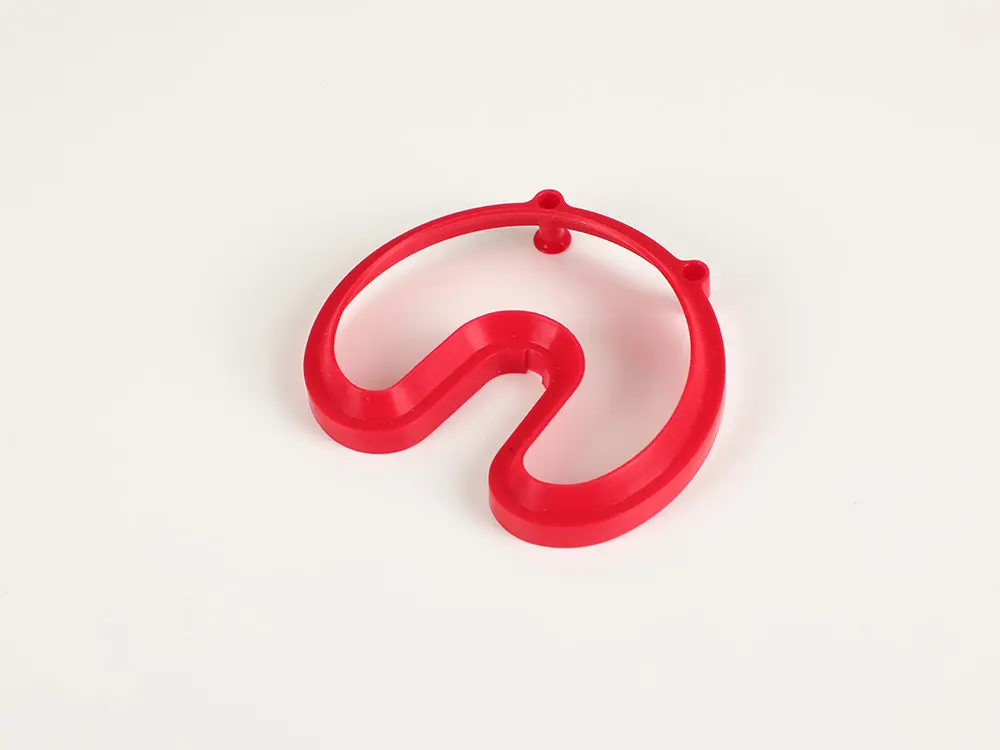
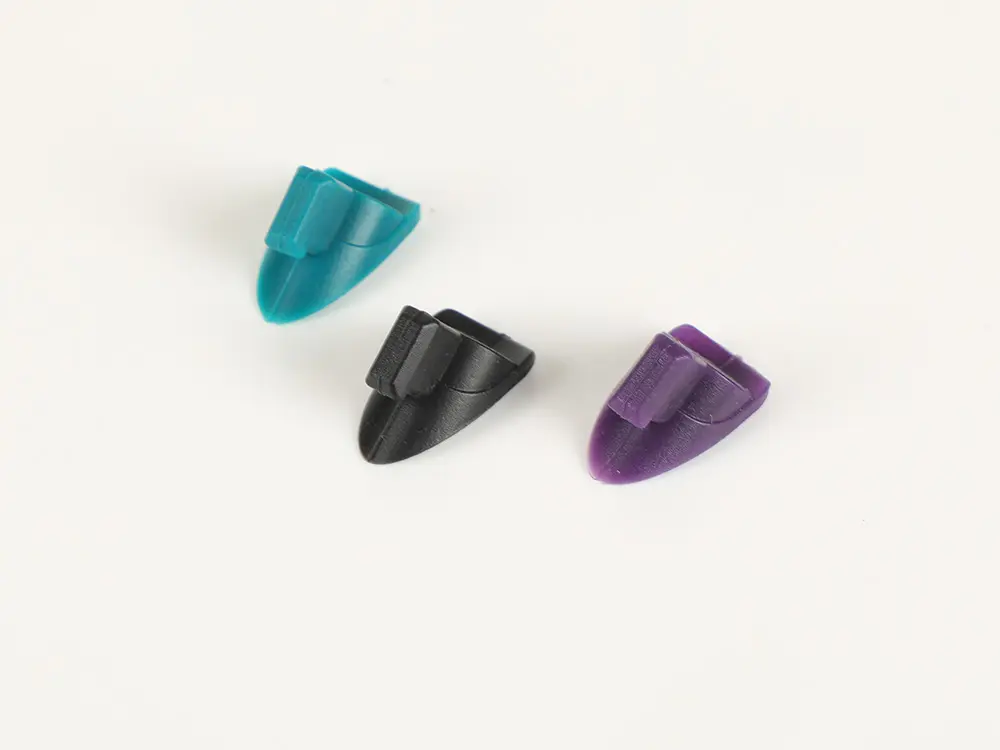
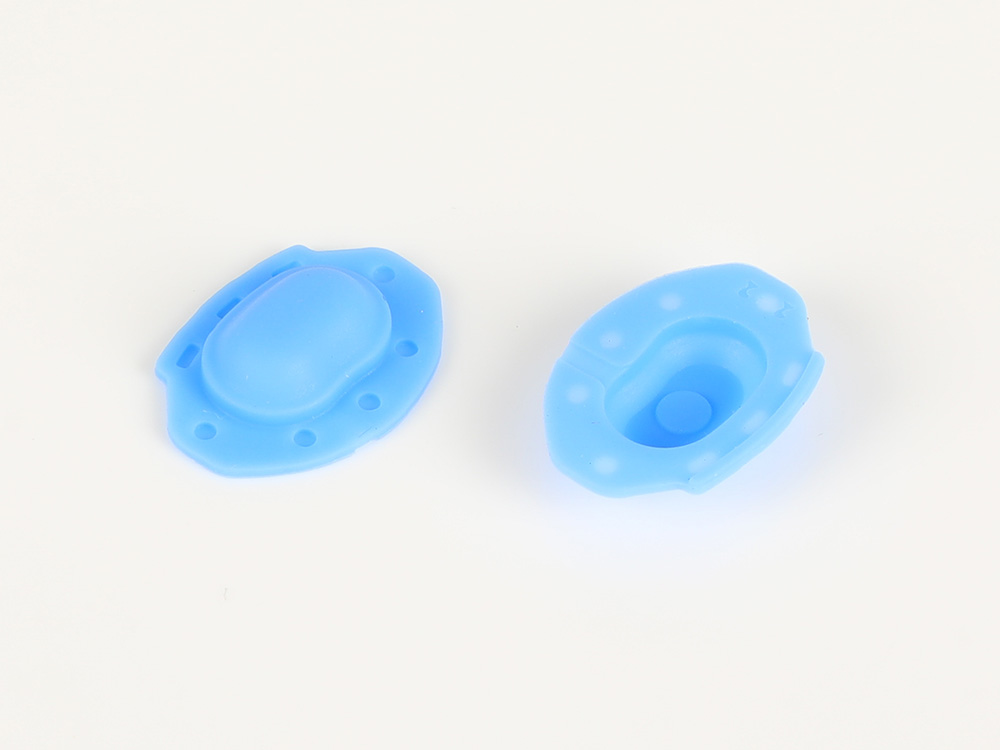
0102030405
Keep In Touch
Contact Us
We are committed to providing you with the best quality service and look forward to communicating with you to solve problems together and bring you a better experience.